Unknown's avatar

About kevinburkeaja

Judge Burke is a Senior District Court Judge in Minnesota. He is a past president of the American Judges Association.

The Constitutional Right to an Implicit Bias Jury Instruction

https://papers.ssrn.com/sol3/papers.cfm?abstract_id=3785645

The Constitutional Right to an Implicit Bias Jury Instruction

The Supreme Court has gone to great lengths to prevent jurors from holding defendants’ silence against them. In a trilogy of opinions, the Court concluded that when a defendant refrains from testifying, (1) the prosecutor and judge cannot make adverse comments about that decision; (2) the judge can give a “no adverse inference” instruction even over a defense objection; and (3) the judge must give a “no adverse inference” instruction upon a defense request. Conversely, the Court has never ruled that jurors can impeach their verdict based upon jurors holding a defendant’s silence against him, and lower courts have ruled against recognizing such a right to jury impeachment.

Meanwhile, the Supreme Court has addressed the issue of juror racial bias in reverse. In 2017, the Court ruled in Pena-Rodriguez v. Colorado that jurors must be allowed to impeach their verdict based on jurors holding a defendant’s race against him. But the Court has never held that there is a right to an implicit bias jury instruction, and no lower court has ever recognized such a right. 

In Pena-Rodriguez, however, the Supreme Court clearly recognized that the right to an impartial jury not only addresses “unique historical, constitutional, and institutional concerns,” but also requires “[a] constitutional rule.” Specifically, the Pena-Rodriguez Court concluded that “[a] constitutional rule that racial bias in the justice system must be addressed—including, in some instances, after the verdict has been entered—is necessary to prevent a systemic loss of confidence in jury verdicts, a confidence that is a central premise of the Sixth Amendment trial right.”

This article contends that this rule must go further and address juror racial bias on both the back end and the front end. For the same reasons that the Supreme Court created the right to a jury instruction that jurors must not hold a defendant’s silence against him, it should recognize the right to a jury instruction that jurors must not hold a defendant’s race against him. Miller, Colin, The Constitutional Right to an Implicit Bias Jury Instruction (February 14, 2021). Available at SSRN: https://ssrn.com/abstract=3785645 or http://dx.doi.org/10.2139/ssrn.3785645 
How Should Derek Chauvin Be Sentenced?

Among the best blogs is Professor Doug Berman’s Sentencing Law & Policy blog. This is one of his recent posts:

As reported in this local article, headlined “Prosecutors seek aggravated sentence against Derek Chauvin, argue George Floyd was ‘treated with particular cruelty’,” the sentencing phase of the prosecution of the former police office convicted of killing George Floyd is now at the first briefing stage.  Here are the basics:

Prosecutors asked a judge Friday to give Derek Chauvin a longer prison sentence for killing George Floyd, arguing that the crime was particularly cruel….

Chauvin will be sentenced on June 25. Minnesota sentencing guidelines suggest that an individual without any prior criminal history should be sentenced to 12.5 years in prison for second-degree murder. However, prosecutors have signaled their intent for months to seek an aggravated sentence against Chauvin.

If Hennepin County Judge Peter Cahill grants the prosecution’s request, Chauvin could face a maximum of 30 years in prison.

Prosecutor Matthew Frank argued in a 26-page memorandum that an aggravated sentence is warranted because Floyd was a “particularly vulnerable victim” and “treated with particular cruelty.” Frank also said Chauvin “abused his position of authority,” committed the crime with three or more others and in front of children.

Chauvin’s attorney Eric Nelson filed a 10-page memorandum Friday opposing the prosecution’s ask, arguing against each of their five points. Nelson wrote that Floyd being handcuffed did not make him “particularly vulnerable.” Nelson pointed to how Floyd was over 6 feet tall and weighed more than 200 pounds and said he was resisting arrest.

Here are links to these new filings with their opening paragraphs:

State’s Memorandum of Law In Support of Blakely Aggravated Sentencing Factors

The State respectfully requests an aggravated sentence for Defendant Derek Chauvin, a former police officer convicted of second-degree murder, third-degree murder, and second-degree manslaughter in connection with the death of George Floyd.  See Blakely v. Washington, 542 U.S. 296 (2004)Minn. Stat. § 244.10Minn. R. Crim. P. 7.03.  The facts proven beyond a reasonable doubt at trial demonstrate that five aggravating factors support an upward sentencing departure.

Defendant’s Memorandum of Law Opposing Upward Durational Departure

On April 20, 2021, a jury convicted Defendant Derek Michael Chauvin of all three counts alleged in the Complaint against him in connection with the death of George Floyd: unintentional second-degree murder, third-degree murder, and second-degree manslaughter.  The State has moved for an upward sentencing departure, alleging that facts support five different reasons for which the Court may impose an aggravated sentence.  Mr. Chauvin, through his attorney Eric J. Nelson, Halberg Criminal Defense, submits the following in opposition to an upward durational sentencing departure.

Should Judges Use Twitter?

California judges who are using social media platforms should be cautious about posting their thoughts on the legal system or the administration of justice, a judicial ethics committee said recently. In a nine-page advisory opinion, the Caifornia Committee on Judicial Ethics Opinions warns that Twitter, Facebook and other online outlets are laden with potential “ethical pitfalls” for bench officers, who are required by canons to avoid the appearance of bias.
The option begins with this. 

Judges may use social media to make statements relating to the law, the legal system, or the administration of justice, but should consider the following when posting or engaging with others online: (1) the same standards for judicial communications that apply in face-to-face settings apply with equal force to online statements and social media posts; (2) due to lack of control over the dissemination and permanence of online statements, judges must exercise caution and restraint and should assume the widest possible audience; (3) while statements concerning the law, the legal system, or the administration of justice are generally permissible, judges may not engage in prohibited social or political commentary on social media; and (4) judges must carefully evaluate what they intend to post and continually monitor their social media communications and posts to ensure public confidence in the integrity, independence, and impartiality of the judiciary.

III. Discussion

Social media has become a pervasive form of communication and socialization in daily life. Social media is commonly used to share information, network, connect with friends, and express opinions. Judges are no exception to the popularity of social media. (Epps & Warren, Resisting Shiny Trinkets in This New Digital Age: Judicial Interaction with Media Platforms (Aug. 2019) 58 Judges’ J. 28, 30 [as of 2016, surveys showed that approximately 40 percent of judges use social media]; Cal. Judges Assn., Jud. Ethics Com., Advisory Opn. No. 78 (2020),p. 3 (CJA Opn. No. 78) [observing that more and more judges are expected to engage in social media over time].)

With social media permeating nearly every aspect of personal and professional life, it is understandable that judges have questions regarding how to use social media without violating the California Code of Judicial Ethics.  In general, social media is governed by the same rules that govern statements made in any other context. However, there are certain ethical pitfalls associated with social media, such as the loss of control over and permanence of statements, that distinguish it from other forms of communication. For guidance, the committee provides the following standards and cautions concerning the use of social media to express opinions related to the law, the legal system, or the administration of justice.

Supreme Court Grants Cert in Confrontation Clause Case

By Evidence ProfBlogger 

This week, the United States Supreme Court granted certiorari in Hemphill v. New York. Here is the issue presented:

Whether, or under what circumstances, a criminal defendant, whose argumentation or introduction of evidence at trial “opens the door” to the admission of responsive evidence that would otherwise be barred by the rules of evidence, also forfeits his right to exclude evidence otherwise barred by the confrontation clause.

As the cert petition notes, there are currently three approaches:

Three jurisdictions hold that criminal defendants never “open the door” to the admission of evidence that is otherwise barred by the Confrontation Clause;

Five jurisdictions hold that defendants “open the door” to testimonial hearsay when they introduce a testimonial statement by the same declarant; and

Three jurisdictions hold that defendants “open the door” to testimonial hearsay whenever they create a “misleading” impression at trial.

In the Hemphill case specifically,

During Darrell Hemphill’s trial for killing a two-year-old boy with a stray bullet during a fight on Easter Sunday 2006, his attorney elicited testimony that police had found a 9-millimeter handgun, the kind of gun used in the crime, on an alternative suspect’s nightstand hours after the shooting. In response, the prosecution introduced that other suspect’s hearsay statement from a guilty plea allocution that he had a .357 revolver with him at the fight, not a 9-millimeter. The Sixth Amendment would normally require the prosecution to introduce such evidence through the live testimony of the other suspect so that defense counsel could cross-examine him. However, the trial judge let in the statement because the judge found that Hemphill had “opened the door” to this hearsay evidence by creating the impression that the other suspect had the 9-millimeter. New York’s highest court affirmed.

An Important Decision By The Supreme Court of Canada

The Supreme Court of Canada ruled that Indigenous people who are not Canadian citizens and who do not live in Canada can have constitutionally protected rights in the country if they belong to groups that are modern-day successors of ones that once occupied territory there.The decision could have far-reaching ramifications for Indigenous people on both sides of the U.S.-Canada border.The ruling in the case of Richard Desautel, a U.S. citizen and member of the Lakes tribe of the Colville Confederated Tribes in Washington state, ended a legal battle that began in 2010 when he shot a cow elk in the Arrow Lakes region of British Columbia.He alerted a conservation officer and was charged with hunting without a license and hunting big game while not a resident of British Columbia.

“Supreme Court ruling grants constitutional rights for Indigenous peoples outside Canada with ties to the land”: Sean Fine of The Toronto Globe and Mail has this report.

 Amanda Coletta of The Washington Post reports that “Canada’s Supreme Court says some Native Americans can hunt in British Columbia.”

You can access the  ruling of the Supreme Court of Canada at this link.

What To Do To Enforce Brady

It has been over 50 years since the United States Supreme Court decided Brady v Maryland. Very few lawyers are still practicing who practiced before there decision. And yet we still see Brady violations with some degree of regularity.

Brian MurrayPaul S. Heaton and Jon Gould (Seton Hall Law School, University of Pennsylvania Law School and ASU School of Criminology and Criminal Justice) have posted Qualifying Prosecutorial Immunity Through Brady Claims(Iowa Law Review, Vol. 107, 2021-22) on SSRN. Here is the abstract: This Article considers the soundness of the doctrine of absolute immunity as it relates to Brady violations. While absolute immunity serves to protect prosecutors from civil liability for good-faith efforts to act appropriately in their official capacity, current immunity doctrine also creates a potentially large class of injury victims—those who are subjected to wrongful imprisonment due to Brady violations—with no access to justice. Moreover, by removing prosecutors from the incentive-shaping forces of the tort system that are thought in other contexts to promote safety, absolute immunity doctrine may under-incentivize prosecutorial compliance with constitutional and statutory requirements and increase criminal justice system error.

The Article seeks to identify ways to use the civil justice system to promote prosecutorial compliance with Brady, while recognizing the need to provide appropriate civil protections to enable prosecutors to fulfill their unique role within the criminal justice system. After developing a novel taxonomy of Brady cases, evaluating such cases against basic tort principles, and considering the prosecutorial community’s views regarding appropriate Brady remedies, it proposes a statutory modification of absolute immunity that might better regulate and incentivize prosecutor behavior, reduce wrongful convictions, and improve access to justice.

What Is An Excessive Fine?

Seven Questions to Ask After Timbs

The title of this post is the title of this new paper authored by Wesley Hottot which is available on SSRN.  Here is its abstract:

This Article explains how Timbs v. Indiana does more than hold that the Eighth Amendment’s Excessive Fines Clause applies to state and local authorities.  Timbs also gives definition to those “excessive fines” the Constitution guarantees “shall not be . . . imposed.”

This definition emerges when Timbs is read alongside three other decisions: (1) Austin v. United States — the Supreme Court’s decision holding that forfeitures are “fines” within the meaning of the Excessive Fines Clause; (2) United States v. Bajakajian — the only other case in which the Supreme Court has applied the Excessive Fines Clause; and (3) the Indiana Supreme Court’s decision on remand in Timbs, which surveys all available case law and adopts a helpful framework for determining excessiveness.  TimbsAustin, and Bajakajian, when combined with examples from federal circuit courts and state high courts, represent a cogent standard for excessiveness.  This emerging standard can be summarized using the familiar “five W’s (and one H).”

There are seven salient questions: Who committed what offense; when and where; what property is the government taking; how was that particular property involved in the offense; and why does the government want it?  By answering these questions based on all the evidence, courts can determine whether a fine or forfeiture is excessive.

Like the five Ws, the seven questions of excessiveness are open-ended by design.  The meaning of “excessive fine” has been open ended and fact-specific for a long time.  The Eighth Amendment’s standard can be traced through centuries of Anglo-American law.  Yet, the standard has never been reduced to strict factors, rigid formulae, or balancing tests. Instead, the “fundamental” and “deeply rooted” right against excessive economic sanctions requires courts to focus on all the circumstances of a particular offense and particular offender.  Each case is viewed holistically, considering what punishments are available, those already imposed, the effect that additional economic penalties will have on the offender and her community, the government’s motivations, examples in case law, and the historical purposes of the protection against excessive fines.  The rich history of that protection, as Timbs makes clear, is key to understanding the meaning of both the Excessive Fines Clause and the Fourteenth Amendment that makes it applicable to state and local government (like virtually all Bill of Rights protections).

Each of the seven questions is explained with reference to the excessiveness standard announced on remand in Timbs, relevant Supreme Court decisions, and examples from lower courts shedding additional light.  The result is an Eighth Amendment excessiveness standard with contours and shape but little in the way of firm boundaries.  Others have proposed a balancing test; this Article proposes an open-ended inquiry that should be allowed to develop on a case-by-case basis.  Put differently, I regard the indeterminate nature of the excessiveness inquiry as a feature, not a bug, of constitutional design.

The Confrontation Clause

Jeffrey Bellin and Diana Bibb (William & Mary Law School and College of William and Mary – William and Mary Law School) have posted The Modest Impact of the Modern Confrontation Clause (Tennessee Law Review, Forthcoming) on SSRN. Here is the abstract: 

The Sixth Amendment’s Confrontation Clause grants criminal defendants the right “to be confronted with the witnesses against” them. A strict reading of this text would transform the criminal justice landscape by prohibiting the prosecution’s use of hearsay at trial. But until recently, the Supreme Court’s interpretation of the Clause was closer to the opposite. By tying the confrontation right to traditional hearsay exceptions, the Court’s longstanding precedents granted prosecutors broad freedom to use out-of-court statements to convict criminal defendants.

The Supreme Court’s 2004 decision in Crawford v. Washington was supposed to change all that. By severing the link between the Sixth Amendment and the hearsay rules, Crawford “ushered in a revolution in the world of evidence and criminal prosecutions.” But the excitement did not last. Shifting majorities filled in the details of Crawford’s lofty rhetoric, muddying the distinction between the new jurisprudence and what had gone before.

This Article takes stock of the “Crawford Revolution.” First, it explores changes in confrontation doctrine since 2004 and examines, as a theoretical matter, how those changes map onto the state and federal hearsay exceptions that Crawford purportedly rendered irrelevant to constitutional analysis. This interplay between the hearsay rules and the Confrontation Clause is critical. The constitutional right would seem to have little significance if all it does is bar evidence that is already forbidden by nonconstitutional hearsay rules. Second, the Article reports the results of a novel empirical survey designed to test the theory by carefully cataloguing the hearsay pathways that generated Confrontation Clause challenges in hundreds of federal and state cases. The findings reveal an underappreciated role of the modern confrontation right, and changes to that role after 2004.

Consent To Search

It takes a certain amount of “guts” to tell a police officer that no I will not consent to your search of my car or person or house. What will happen to me if I say no?

Norman Hobbie has posted Fourth Amendment Consent Searches and the Duty of Further Inquiry (Creighton Law Review vol. 54, no. 2, pg. 227-268, March 2021) on SSRN. Here is the abstract:

Consent searches, presently justified on arguably weak grounds, account for nearly ninety percent of all warrantless searches. Though scholars debate whether the Fourth Amendment bars consent searches, the Supreme Court of the United States has continued to reaffirm the constitutionality of such searches. Under current doctrine, third parties, often without actual authority, are able to consent to a search of another’s premises. Yet, if doubt endures over whether an individual possesses adequate authority to offer consent, officers may have to engage in further inquiry to resolve whether sufficient authority exists.

With little guidance offered as to what this further inquiry entails, there is currently a split among the circuits as to the dimensions of this directive. On one end of the split, some circuits require that if ambiguity exists over authority, a duty of further inquiry is triggered. The other circuits, by contrast, have either expressly rejected the application of the duty, or have yet to take a position on the issue. This Article’s first contribution is to adopt the United States Court of Appeals for the Seventh Circuit’s view of the duty of further inquiry. Thus, when officers are faced with other equally plausible possibilities for a consenting party’s authority, officers have a duty of further inquiry. This Article’s second contribution is to clarify and augment the Seventh Circuit’s approach. This Article modifies and defines the ambiguity threshold triggering the duty of further inquiry and delineates the substance of that inquiry.

Are Zoom Trials Fair & Effective?

For proponents of Zoom hearings the answer is Zoom hearings….indeed virtual jury trials…..are a magnificent by product of courts trying to respond to the pandemic. But are they really fair and effective. The Atlantic magazine explores the issue:

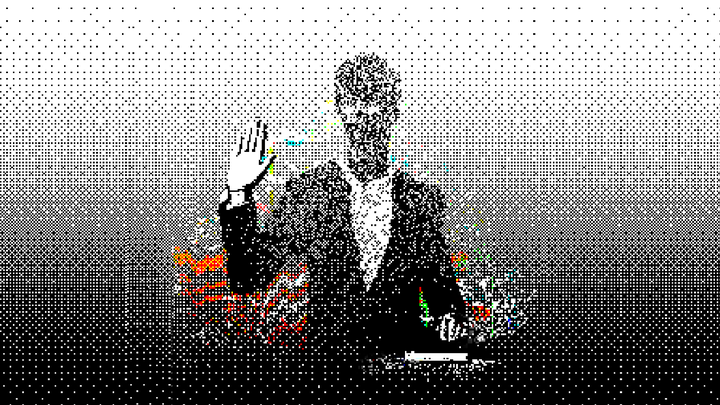
illustration of pixellated person taking oath with one hand raised

SOMNATH BHATTThis article was published online on April 13, 2021.In july, Michelle Rick, then a circuit-court judge in two Michigan counties, tweeted cheerily about a divorce she’d recently finalized. The participants had appeared in court via their smartphones. “He was on the road & parked his car to attend; she video-tx’d from her work breakroom,” the judge wrote. They were done in 15 minutes—faster than the proverbial Reno divorce.  For the full story in the Atlantic see: https://www.theatlantic.com/magazine/archive/2021/05/can-justice-be-served-on-zoom/618392/